Reizah May Osdaña
Head Nurse
Care at home
Trusted clinical care, right where you are.
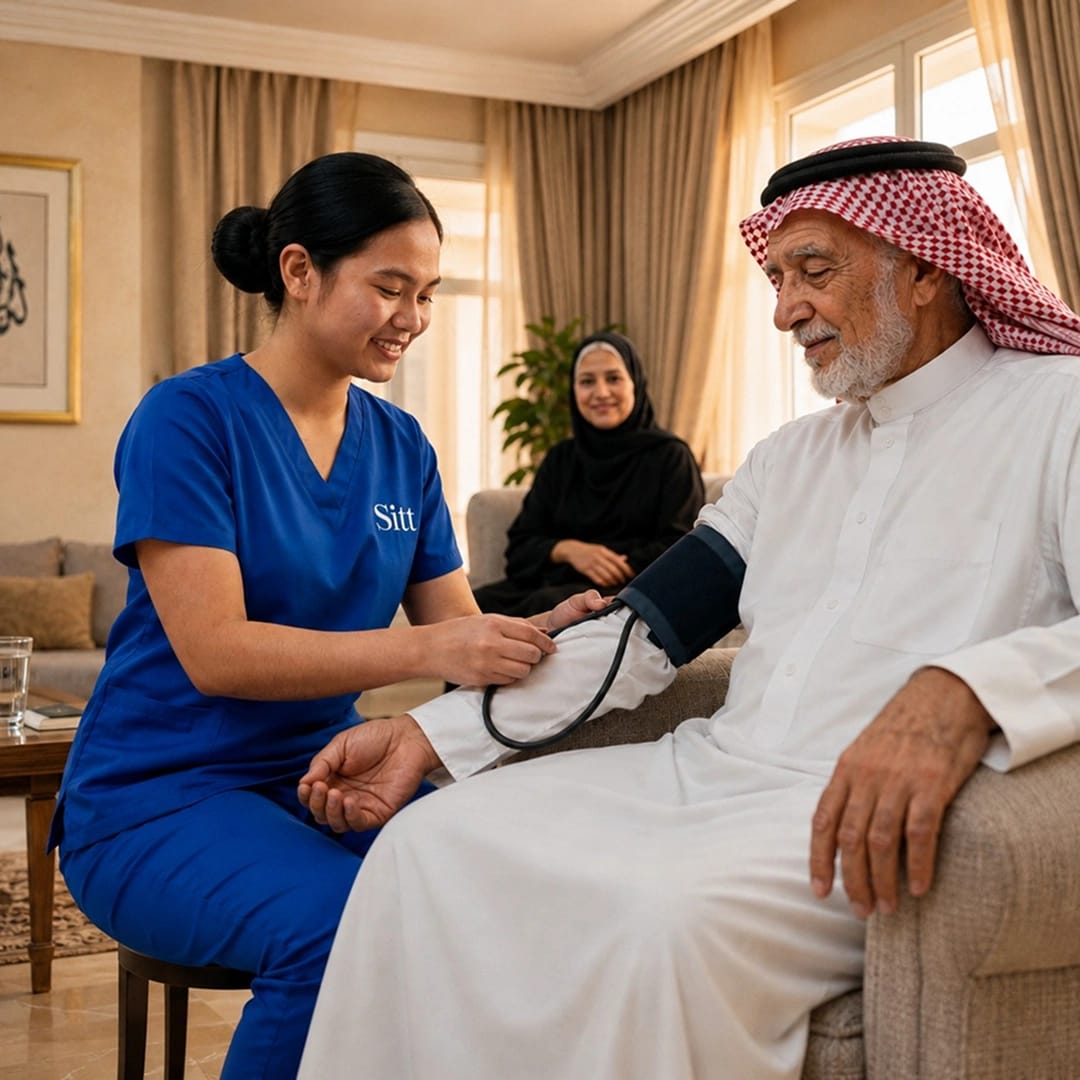
What our nurses do at home, working from your physician’s orders and within their licensed scope.
Dressing changes, surgical wounds, pressure injuries, diabetic foot ulcers and stoma management, with photographic progress records.
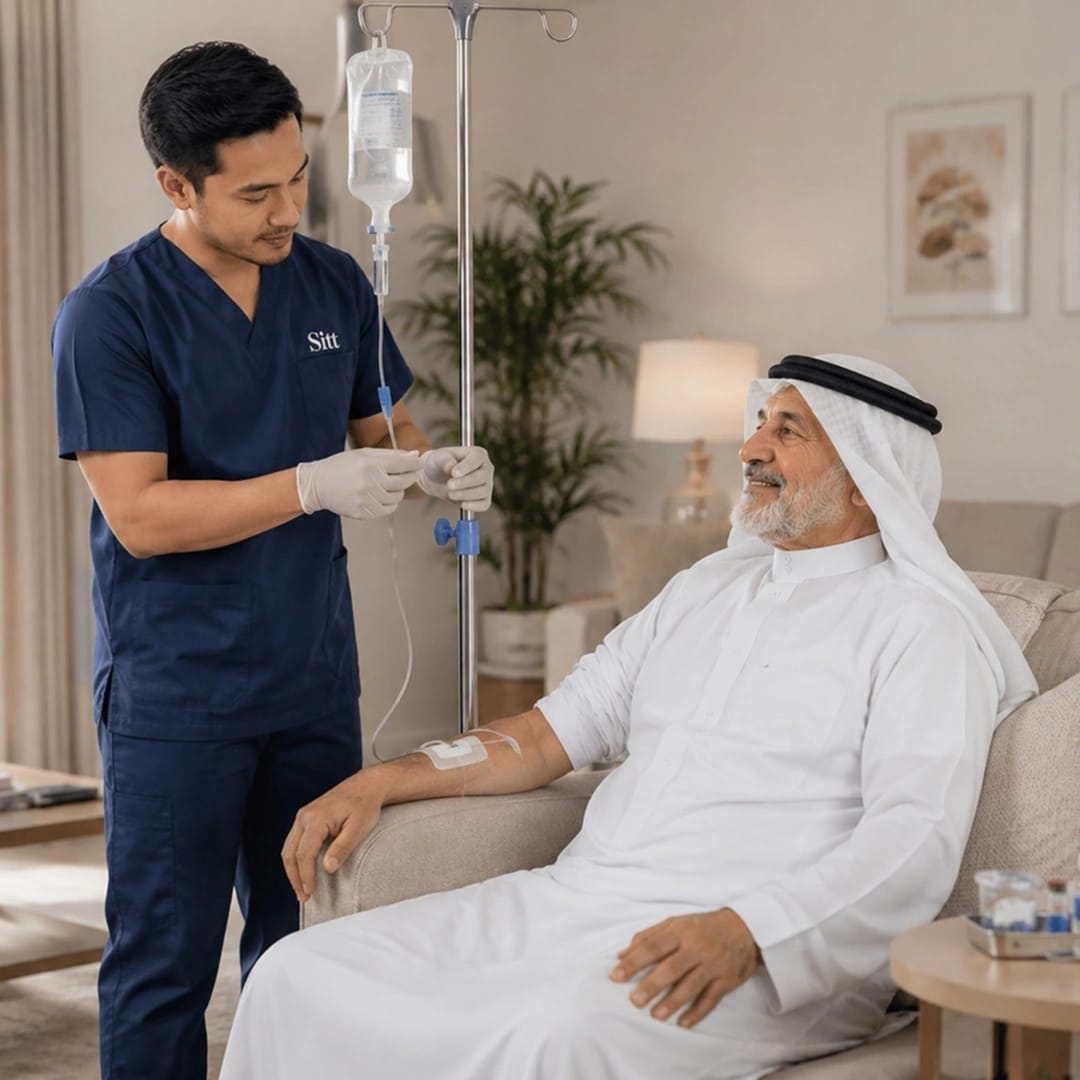
Intramuscular and subcutaneous injections, insulin, anticoagulants, IV antibiotics and hydration via peripheral line or PICC.
Urinary catheter insertion, change and care; nasogastric and PEG feeding, flushing and site management.
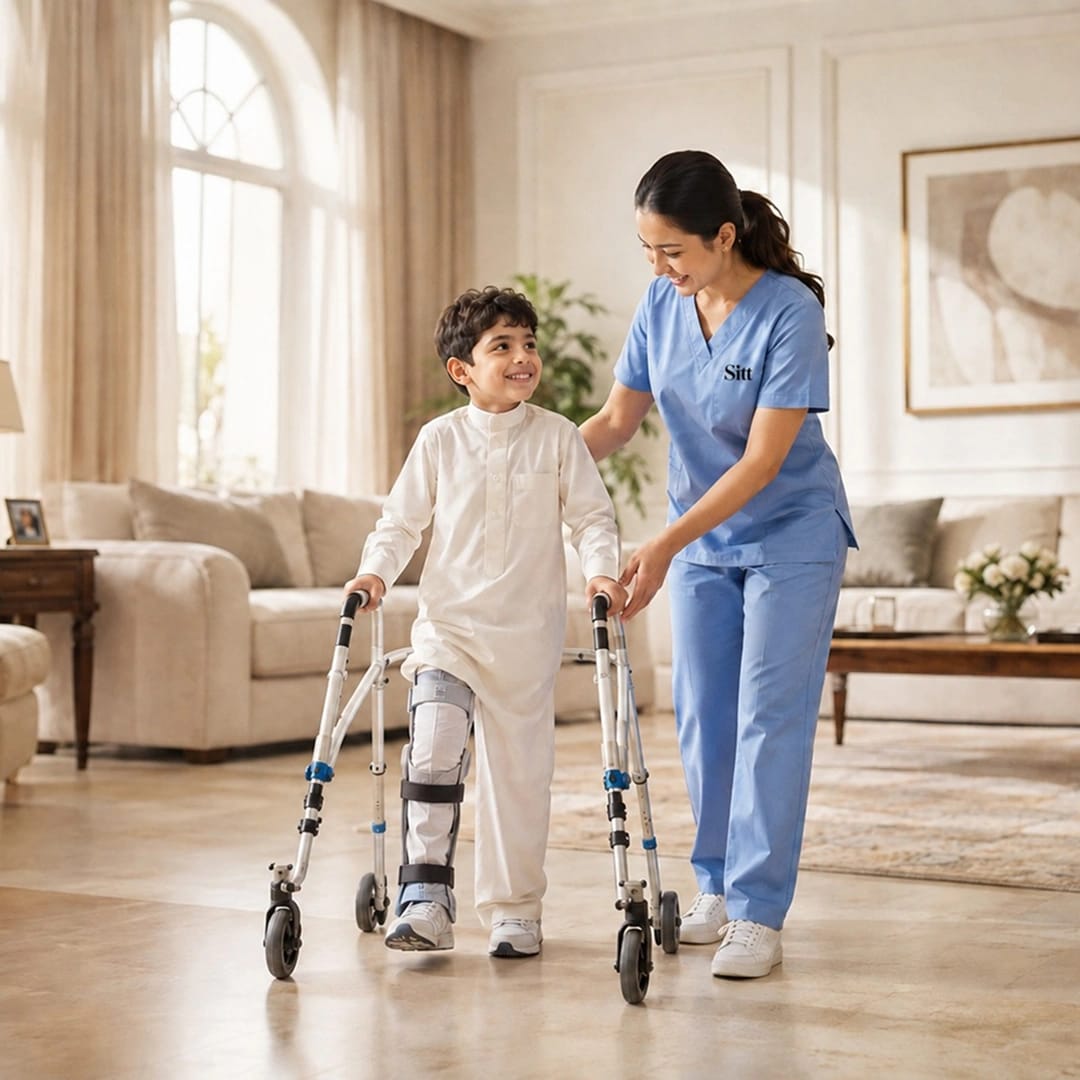
Vital signs, pain management, drain care, mobilisation support and escalation criteria agreed with your surgeon before discharge.
Diabetes, hypertension, heart failure and COPD — monitoring, medication administration, and early warning of deterioration.
Structured notes after every visit, shareable with your treating physician, plus a defined escalation path day and night.
Every nurse holds a current Saudi Commission for Health Specialties registration, which we verify directly and re-check at renewal.
Head Nurse
Nurse
The answers families ask for most before their first booking.
Yes, without exception. Every Sitt nurse holds current professional registration with the Saudi Commission for Health Specialties. We verify the registration directly with the Commission before their first visit, record the expiry date, and suspend the nurse from bookings if renewal lapses. You can ask your coordinator for the registration number of the nurse assigned to you.
For prescribed treatments — IV antibiotics, injections, anticoagulants, wound care following surgery — yes, we need the physician’s prescription or the hospital discharge summary. For assessment, vital signs monitoring, catheter care and general nursing support, no referral is required. If you are unsure, send us the discharge paperwork and our clinical lead will tell you what is covered.
Usually within 24 hours, and often the same day if you contact us before discharge. Send the discharge summary while you are still on the ward: our clinical lead reviews it, writes the care plan and assigns a nurse, so the first visit can happen the evening you get home. That is the window in which readmissions are most preventable.
Tracheostomy care and suctioning, yes, with nurses specifically assessed for it. Invasive ventilation at home is accepted case by case, on a continuous shift model with a rotating team and written escalation criteria agreed with your treating physician. Our clinical lead will tell you plainly if we are not the right provider for a case.
Scope and licence. A carer supports daily living — washing, dressing, meals, mobility, company — and may prompt medication that has already been dispensed. A nurse holds a professional licence and performs clinical procedures: administering medication, injections, IV therapy, wound care, catheters and clinical assessment. Many households use both, and moving a case from nursing to elderly care as recovery progresses is one of the most common ways families reduce cost.
Our clinical lead, a nurse with intensive care and community nursing experience, owns the care plan and reviews documentation at fixed points. Nurses escalate to them, and they escalate to your treating physician. There is a 24-hour escalation line for anything clinical.
Available at home across all three of our service areas. Outside them? Message us — we cover surrounding governorates on request.