Reizah May Osdaña
Head Nurse
Care at home
Daily support that keeps independence intact.
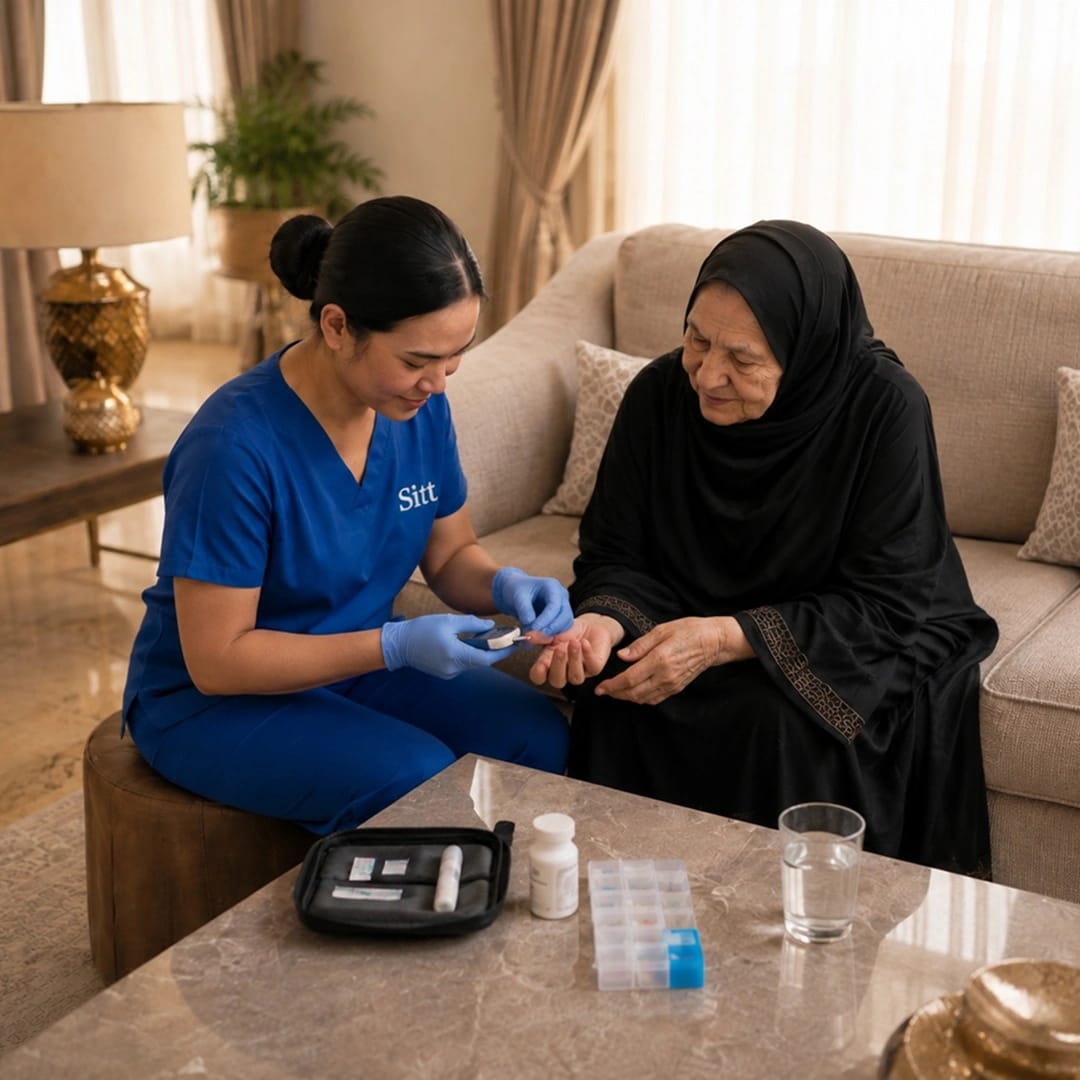
A standard elderly care visit covers the whole shift, not a list of tasks with a stopwatch on it.
Bathing, dressing, grooming, toileting and continence support, delivered by a carer trained in transfers and in preserving privacy.
Prompting and recording against the prescribed schedule, with a photograph of the dosette box logged in the app. Administration itself needs a nurse.
Safe transfers, walking practice, help to and from the bathroom, and a walk-through of the home to remove the rug that keeps catching a heel.
Conversation, prayers, reading, cards, a walk to the majlis. Isolation is the risk families underestimate most.
Preparing and sitting through meals, monitoring intake, washing up, laundry and keeping the bedroom and bathroom safe and clean.
Accompanying to clinic visits, taking notes for the family, collecting prescriptions and reporting back the same day.
Elderly care carers average nine years of experience. Every one has been assessed in person by our head of care before taking a booking.
Head Nurse

Assistant Nurse
The answers families ask for most before their first booking.
A carer may prompt and record medication that has already been dispensed into a dosette box, and will log it with a photograph. Actually administering medication — including injections, insulin and anything through a line — requires a licensed nurse, which is our home nursing service. If your mother needs both, we often place a carer for the daily visits and a nurse for the clinical ones.
Yes, for early and moderate dementia. All elderly care carers complete a 12-hour in-house dementia awareness course, and we deliberately keep the same carer on the same slot because familiarity reduces agitation more than anything else we can do. For advanced dementia with clinical complications we usually recommend combining a carer with nursing oversight.
An overnight carer works a ten-hour waking shift and goes home in the morning — right for nights that are genuinely disturbed. A live-in carer lives in the home on a rotating pair, sleeps at night, and is there for the whole day. Live-in works out cheaper per hour; overnight is better when the nights are the problem.
Yes, and we push for it. Continuity is the single biggest driver of satisfaction in elderly care. When you book a fixed weekly slot the carer is held for you. If they are ill or on leave, your coordinator briefs the cover carer from the care plan so nothing has to be explained twice.
Light housekeeping connected to the person receiving care — their meals, their laundry, their room and bathroom, washing up after meals. A carer is not a housemaid and will not clean the rest of the house, because time spent scrubbing floors is time not spent with your parent.
It is common, and usually about control rather than the carer. We start smaller than you think you need — one short visit framed as help with a specific task rather than 'care' — and we send a carer whose manner suits him. Most resistance settles within three visits. If it does not, tell your coordinator and we will change the approach or the person.
Available at home across all three of our service areas. Outside them? Message us — we cover surrounding governorates on request.