Medical support
Physiotherapy
Movement that meets you where you are.
- Licensed physiotherapists only
- Assessment before any treatment plan
- Stroke, post-op, falls and chronic pain
- A home exercise programme you keep
What we treat
The caseloads our physiotherapists are assessed on before they visit homes.
Post-operative rehabilitation
Knee and hip replacements, spinal surgery and fractures — range of motion, gait retraining and strength work sequenced to your surgeon’s protocol.
Stroke and neurological rehab
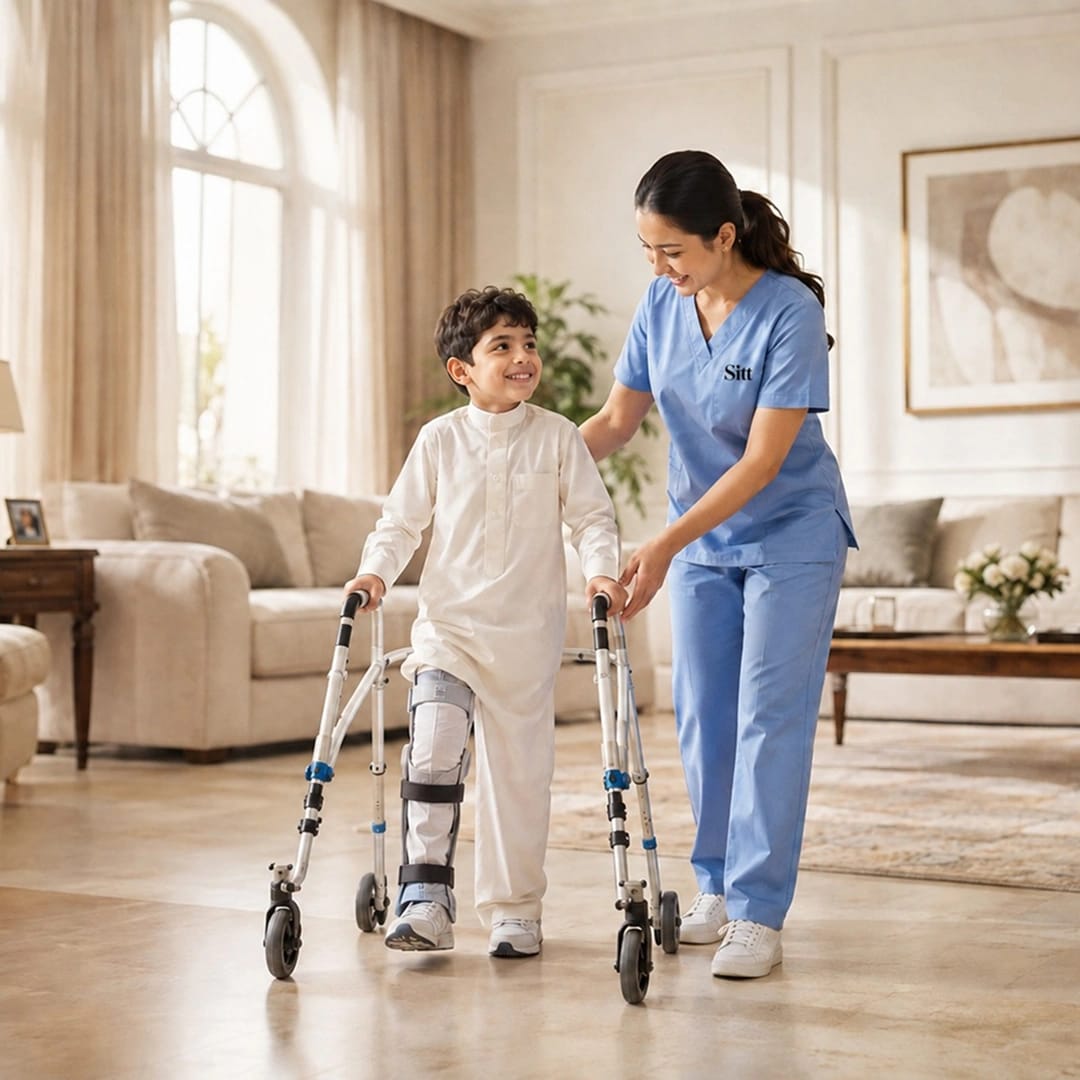
Gait, balance, upper-limb function and safe transfers, with the family taught how to assist without hurting themselves or the patient.
Falls prevention
Balance and strength work, plus a walk through the home itself: rugs, thresholds, bathroom transfers, chair heights and lighting.
Pain and musculoskeletal care
Back and neck pain, frozen shoulder and sciatica — manual therapy with a graded exercise plan, rather than open-ended sessions with no end point.
Respiratory physiotherapy
Airway clearance and breathing work for COPD, bronchiectasis and recovery after pneumonia or a chest infection.
A programme you keep
Written and filmed exercises for the days between visits, reviewed and progressed each session so the work continues without us.
Who this is for
- Discharged after a knee or hip replacement with a rehabilitation protocol to follow
- Recovering from a stroke, where getting to a clinic is the hardest part of the week
- An older parent who has had a fall, or has started to fear one
- Back or neck pain that has outlasted rest and painkillers
- A chronic respiratory condition needing regular airway clearance
- Anyone whose progress stalled because clinic appointments were too far apart
The physiotherapists behind this service
Neurological and orthopaedic rehabilitation are different jobs, so we assess for them separately rather than treating physiotherapy as one skill.
- Professional registration verified at source before the first visit
- Bachelor or Master of Physiotherapy, verified with the awarding institution
- Minimum three years of clinical practice, including inpatient rehabilitation
- Assessed separately on neurological and orthopaedic caseloads
- Basic life support certification, current
- National police clearance, renewed annually
Frequently asked questions
The answers families ask for most before their first booking.
Do I need a referral to book physiotherapy?
Not for musculoskeletal problems like back pain, neck pain or a frozen shoulder — you can book an assessment directly. For post-operative and neurological rehabilitation we do ask for the surgeon’s protocol or the hospital discharge summary, because the safe limits on movement and weight-bearing are set by whoever performed the procedure, and working outside them can undo the surgery.
How many sessions will I need?
The assessment answers this properly, but as a guide: a straightforward musculoskeletal problem is often six to eight sessions, post-operative rehabilitation typically runs six to twelve weeks alongside a daily home programme, and stroke rehabilitation is measured in months rather than weeks. You get an expected number in writing after the assessment, and we reassess against it rather than letting a plan drift on indefinitely.
Can physiotherapy really work at home without gym equipment?
For most cases it works better. Our physiotherapists bring what a session needs — resistance bands, gait belts, balance equipment — and the rest of the work uses your own stairs, your own chair and your own bathroom. Those are the environments you have to manage every day, so training in them transfers directly. Clinic gyms are genuinely better for a narrow set of cases involving heavy equipment or hydrotherapy, and we will say so if yours is one.
Will you teach the family how to help?
Yes, and for stroke and post-operative cases it is a large part of the value. Transfers, safe assistance, how to spot when someone is compensating in a way that will cause a second problem, and which exercises to prompt between visits. Families who are shown this once tend to make far faster progress than those left to guess.
What is the difference between a physiotherapist and a carer who helps me walk?
Scope and training. A carer supports you to move safely as part of daily life — steadying you, helping you to the bathroom, encouraging a walk. A physiotherapist assesses why movement is limited, and treats it: joint range, muscle strength, balance mechanisms, gait pattern. Many households use both, with the physiotherapist setting the programme and the carer prompting it between sessions.
Can you treat someone who is bed-bound?
Yes. Bed-level work covers passive and active range of motion to prevent contractures, positioning to protect skin and joints, respiratory physiotherapy where the chest is at risk, and a graded plan for sitting, standing and transferring when the person is ready for it. Progress is slower and measured in smaller increments, and we will be honest with you about what is realistic.
Where we offer physiotherapy
Available at home across all three of our service areas. Outside them? Message us — we cover surrounding governorates on request.